Produced by


Produced by
Published November 24, 2026
Ethylene plants, often called olefin plants, require a lot from valves that control multiple processes with varying temperatures, pressures and levels of particulates.
ETHYLENE IS A BASIC BUILDING BLOCK OF THE CHEMICAL INDUSTRY AND IS THE LINK BETWEEN CHEMICAL COMPANIES AND PETROLEUM REFINERS. An ethylene plant is often called an olefin plant because the end products are olefins. The ethylene or olefin plant will yield mostly ethylene but will also break the feedstock into several other usable byproducts, including propylene, butadiene and gasoline.
The initial process is cracking, which means that the feedstock is heated to the point that the energy transfer from heat is enough to “crack” the molecules into several smaller molecules. The feedstock is diverted to multiple furnaces and then further divided between multiple passes before entering the furnace.
In the convection section, the feedstock is mixed with dilution steam to reduce coking and improve product yield. This mixture is preheated using high-pressure steam before entering the radiant section. The radiant section has several burners which raise the temperature of the feed to 1380–1560°F (750–850°C), ensuring a high enough temperature for cracking to occur. It is important that the time in this section is kept short to prevent further reactions from occurring, which would decrease desired product yield.
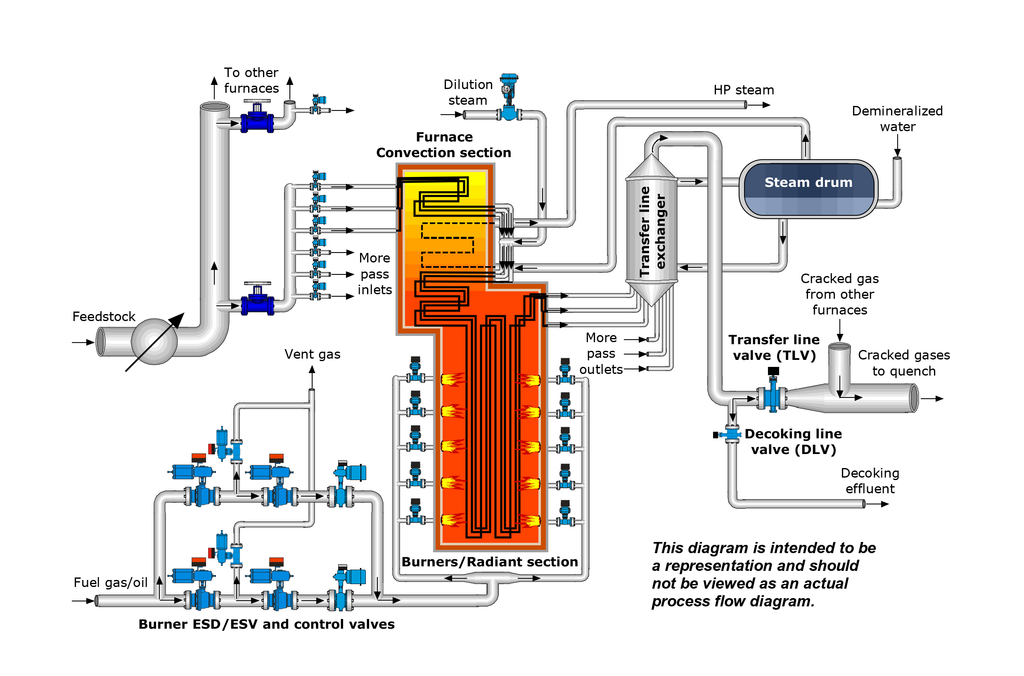
After exiting the furnace, the cracked gases quickly enter the transfer line exchanger where they are indirectly cooled to prevent further reactions from occurring.
Next, the cooled gases are quenched with oil and/or water. This is followed by product fractionation, which includes distillation and other processes for separating recoverable products.
Cracking furnace valves
The cracking furnace section of a steam cracker includes valves for controlling the supply of feedstock, with each pass having its own control valve.
The fuel gas/oil section has two isolation emergency shutdown (ESD) valves and an emergency safety vent (ESV) valve located between these, in what is called a double isolation and bleed setup. A control valve follows the second ESD valve, and at least one ESD shutoff line is present, however most modern safety regulations require redundant lines to ensure operation in case of a malfunction. Finally, there are also separate shutoff valves for each burner.
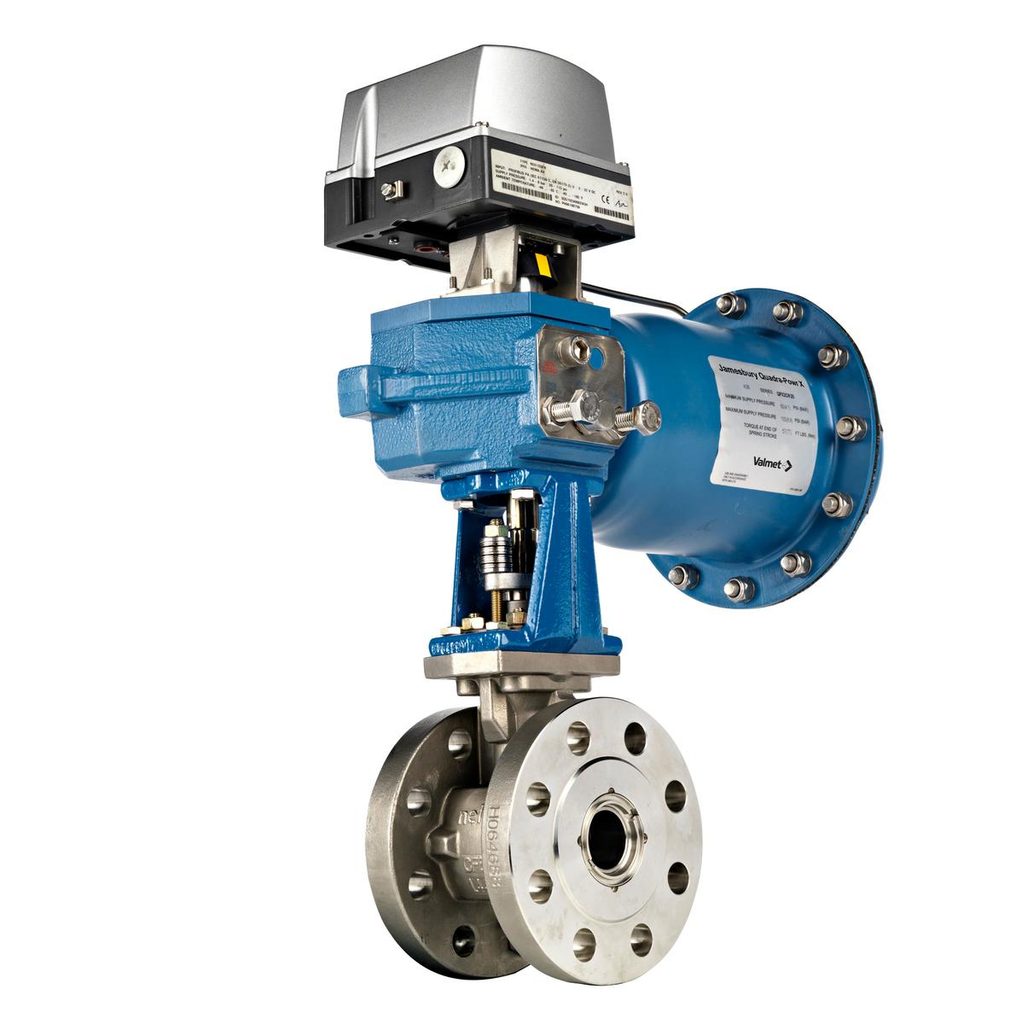
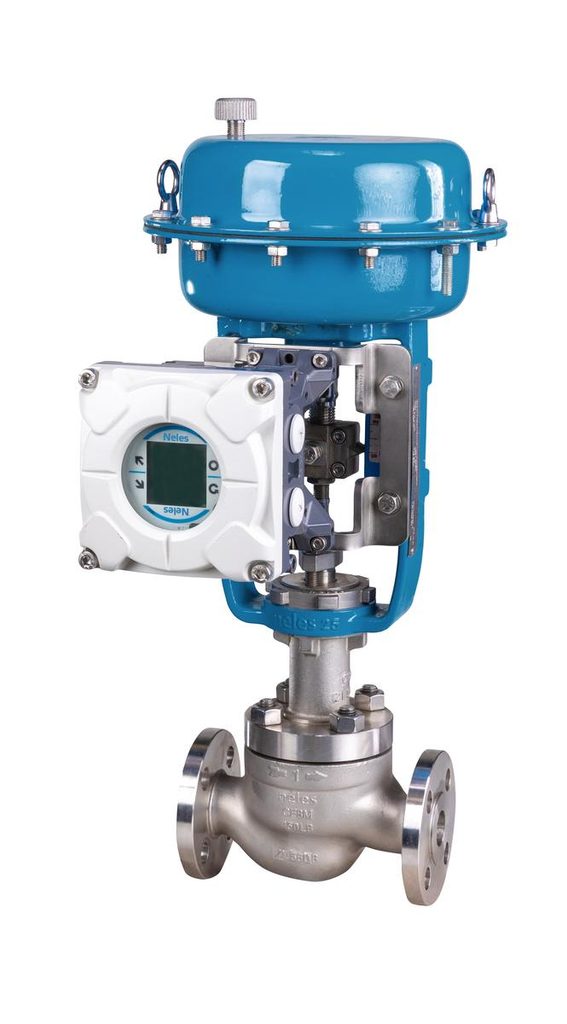
In addition, dilution steam is also on flow control. There may either be a single valve present controlling the total flow of dilution steam, or each pass may have a control valve of its own.
Following the transfer line exchanger, a transfer line valve (TLV) and a decoking line valve (DLV) are present, one of which is open and the other one closed depending on whether the furnace is in operation or is being decoked.
Feedstock supply
An ethylene steam cracker can accept a variety of different feedstock materials. Naphtha, ethane, propane, gas oil and other feedstocks can be cracked to produce ethylene. The choice of feedstock can depend on the cracker furnace construction, the availability of the particular feed, its current market price and the desired end products. The amount of the particular feedstock required depends on the desired product yield.
The process system in an ethylene cracker must supply the correct amount of raw materials to produce the desired end product. The feedstock supply valve must be able to control this as accurately as possible, considering that in some cases the feedstock can be a liquid and sometimes a gas, making it one of the most important control valves. As the flow rate difference between low flow and full capacity can be huge, some ethylene producers use separate valves for each case. Fire-safe design is also often a requirement as the feed can be volatile. Depending on the feedstock, cavitation or high noise may also be an issue. Typical system parameters include a temperature of 250–300°F (120–150°C), upstream pressure of 85–150 psig (6–10 bar) and downstream pressure 30 psig (2 barG).
Valves for feedstock supply
There are two different choices of control valves which are well-suited for feedstock supply: a linear globe or a quarter turn rotary design. The selection of which valve to use depends on the type of feed and piping layout of the plant.
In the case of a gas feed, a globe valve with a pneumatic linear diaphragm actuator and an intelligent valve controller offers an excellent option for the application ensuring accurate control. Some advantages to using this globe valve set up:
▪ Flow can be adjusted with changing capacities and feedstock;
▪ A variety of trims are available to reduce noise or eliminate cavitation depending on process condition requirements;
▪ Globe valves with top entry construction allow for easy access to the valve for maintenance or repair; and
▪ Predictive maintenance is possible with online diagnostics from a smart controller.
An eccentric rotary plug valve could also be used with a spring-return pneumatic linear actuator and intelligent valve controller, and is well suited for control both liquid and gas feeds. This choice can be more economical as a high-performance solution for the application. Advantages include:
▪ A single valve solution eliminates the need for split range control;
▪ Potential for improved energy efficiency as reliable control reduces process variability; and
▪ Compact size of this configuration allows space for the valve in the piping design in systems with less clearance.
Fuel gas/oil control
The burners create the heat required to crack the feedstock. They are also used during decoking, though the temperature requirement is lower in this case and therefore not all burners are in operation. Steam crackers can use a variety of fuels to feed the burners, depending on the most economical or practical fuel available at the time, and can range from natural gas to crude oil. Newer more modern crackers are capable of taking advantage of various fuels to feed the burners.
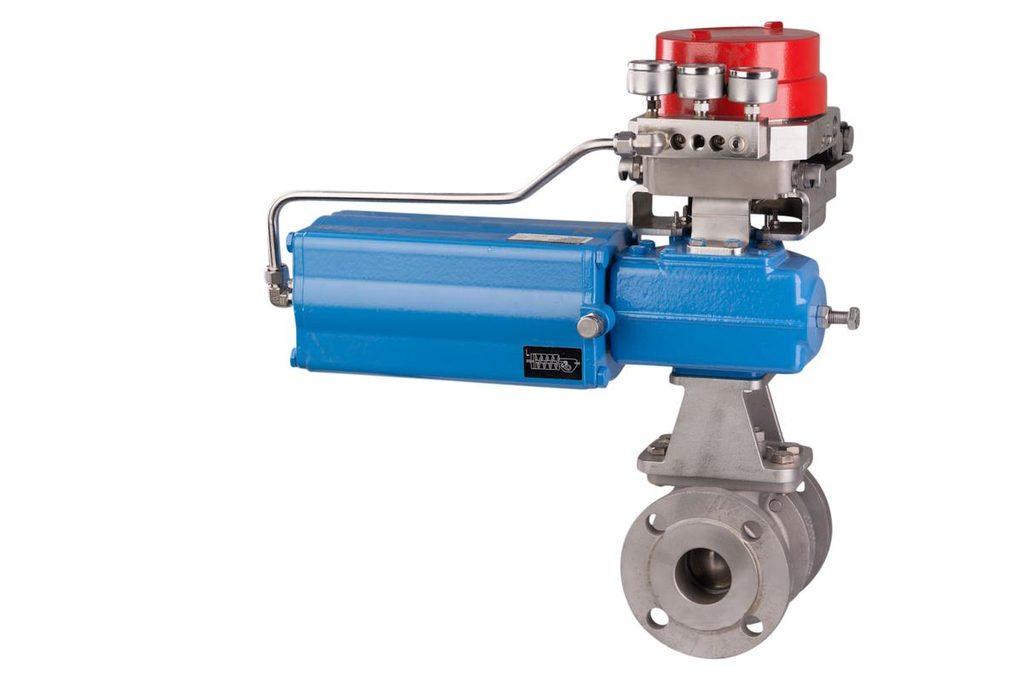
The different heat generation properties of the fuels require a valve which can regulate the flow accord ingly. In addition, the relatively low temperature required during decoking of the furnace demands that the valve control small flows of fuel, as not all the burners are operating. To ensure a more reliable operation, fast reaction to signal changes is required to quickly adjust temperature to account for fouling and switching to decoking. Noise reduction capabilities may also be necessary, especially if fuel gas is being used. Typically the temperature is 100–400°F (40-200°C) and the pressure is 30–150 psig (2 to 10 barG).
There are multiple valve options for these systems, but two that arewell-suited for this application are a cage-guided globe valve and a v-port ball valve. A balanced, cage-guided globe valve with a spring diaphragm actuator and a valve controller may be used, especially for systems with limited variety in the type of fuel used and where good rangeability is required. An advantage is the one-piece body structure that minimizes leaking, ensuring the volatile fuel doesn’t leave
the piping. Another advantage of a cage-guided globe valve is the variety of trim options available for different applications.
If the type of fuel being used is more variable or extreme rangeability is required, the second option is a v-port quarter-turn ball valve may be considered with an actuator and valve controller. This system setup provides:
▪ High rangeability for various types of fuel and during startup, full capacity and decoking conditions;
▪ No potential leak paths even if subjected to pipe bending forces as the valve features a one-piece body construction;
▪ Reduced fugitive emissions because rotary valves are inherently less prone to leaks;
▪ Low torque requirements reduce wear and actuator size required, resulting in better reliability and a lower cost unit; and
▪ Different trim designs are available, as well as fire-safe compliant options.
Burner shutoff and ESD valves
Gas flows into the burners through a series of two ESD valves that have a vent between them. The vent is used to prevent pressure buildup and flow through the second isolation valve when the system is isolated. The ESD valves automatically shut off the supply of fuel when de-energized by a combustion safety control, safety limit control or loss of actuating medium. This is followed by burner shut-off valves, some of which are shut during decoking operations.
It is imperative that the ESD valves operate properly even after extended periods of non-operation. Type approvals are also becoming a standard requirement by many local authorities. Typical conditions are like the control valve.
Soft-seated ball valves are a good option for burner shut-off/ESD applications, with a safety solenoid installed to ensure operability in case of a system upset. For shutoff valves, a similar ball valve with an actuator can create an excellent system for tightness during shut off.
Dilution steam supply
Dilution steam supply to the cracker furnace takes place at a temperature near the transition between saturated and superheated steam. The flow rate of the steam depends on the severity of the reaction.
Depending on the technology of the furnace and control systems, the criticality of the steam flow control system can vary. In modern crackers where the furnace process is highly optimized, more accurate control is required. Poor performance of the steam supply valve can lead to excessive fouling of the cracker. Dilution
steam can also be used for decoking the furnace, making good rangeability a requirement of this valve. Steam often causes high pressure drops and noise, which must be considered when choosing an appropriate valve. Typically, the temperature in this part of the system is 350–400°F (180–200°C), the pressure is 150 psig (10 barG) and the pressure drop is 30–100 psi (2–7 bar).
A linear globe valve with an actuator and intelligent valve controller for general steam dilution/steam control with noise reducing trim (if needed) is a good option for this application. Using the same valve during decoking and operation due to its wide rangeability allows the flow to be adjusted accordingly. Noise reduction can be achieved with specific trim and other noise control components such as silences or baffle plates, and reliable control prevents excessive fouling of the furnace coils.
Transfer line and decoking valves
Regular decoking is required to remove coke from the furnace coils, typically every 3–4 months per furnace depending on the type of feed and reaction severity of the process. Decoking is typically done by steam/air. When end-of-run conditions are reached, the hydrocarbon feed is discontinued, the furnace is isolated, the firing rate in the burners is adjusted and then controlled amounts of dilution steam and decoking air are introduced to the system. The decoking effluent is routed to decoking drums where the coke fines are separated from the decoking effluent gases.
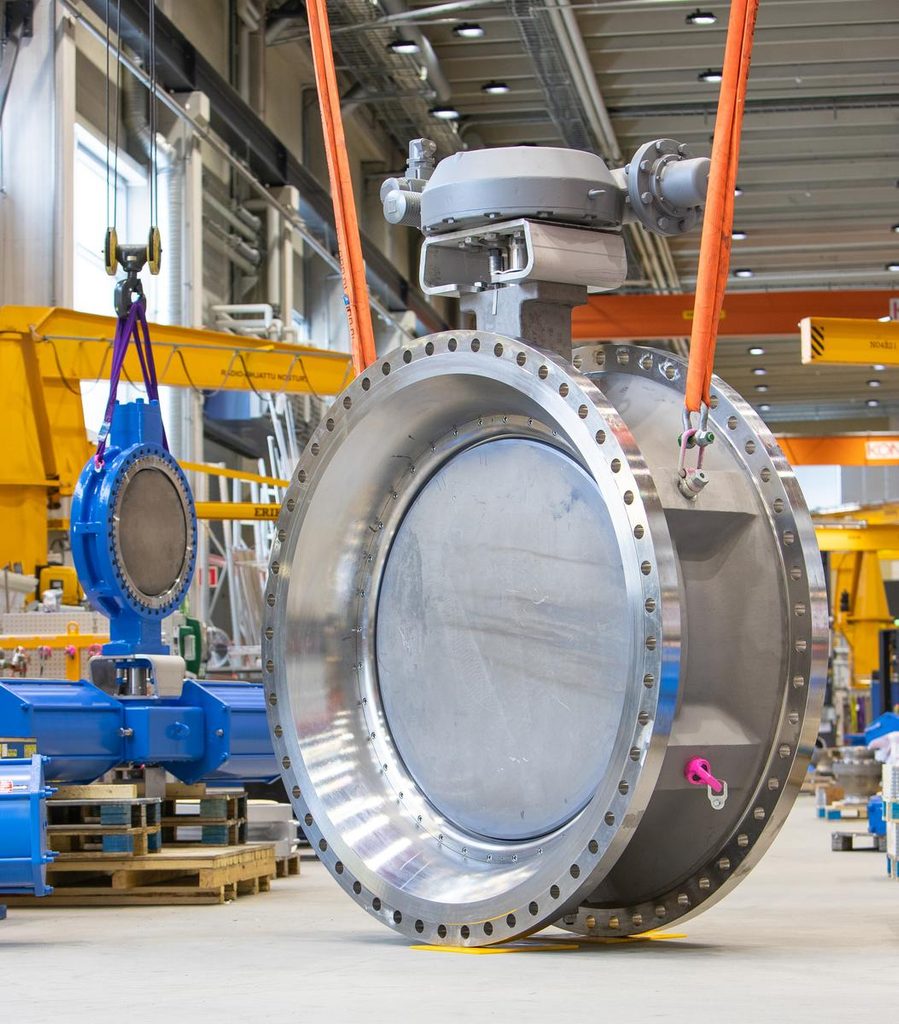
Decoking valves must withstand high piping forces due to large temperature variations. The downstream process must be protected from fire, high-temperature steam and coke to ensure plant operability and safety, making leak-tightness essential.
A double block and bleed butterfly valve design is often used in these applications. The triple offset design has two separate discs connected by a stem or shaft. These valves have been proven in the field to:
▪ Have long-term tightness for safe and reliable furnace operation;
▪ Meet noise, emissions and fire safety regulations of most local authorities;
▪ Eliminate the possibility of valves getting stuck due to piping forces, temperature variations or coke accumulation; and
▪ Have a high safety record and market availability for ESD/ESV applications.
Conclusion
The technical demands of steam cracking furnaces are high. In each furnace, feedstock and dilution steam must enter at controlled rates, fuel valves must maintain the heat needed for cracking and the resulting gases must be cooled quickly to preserve the desired products. Small changes in flow or temperature can affect yield, accelerate coke buildup and shorten the time between maintenance shutdowns.
Valves are central to that control. Feed and steam control valves help operators hold the right process conditions as throughput or feedstock changes. Fuel control valves regulate burner heat, while emergency shutdown valves isolate fuel when a trip occurs. Transfer-line and decoking valves must keep the production and cleaning paths securely separated, even through large temperature swings and exposure to coke.
When adding capacity is difficult to justify, dependable operation of existing capacity matters more. Well selected, maintained and monitored valves help crackers protect yield, limit unplanned downtime and operate safely through the next market cycle.
All images and illustrations in this article were provided by and are copyright of Valmet Corporation. This article was modified from a previously published version by Valmet Corporation.