
Produced by


Produced by
Published August 20, 2026
By Heather Gaynor
Shutting down a plant is expensive, so planning is critical to success.
This article was written to help explain plant shutdowns to give readers who haven’t experienced this a look behind the scenes of the myriad considerations and resources involved. During the recent Valve Repair Seminar produced by the Valve Repair Council, sessions offered perspectives from manufacturers, repair companies and end users of valves, actuators and other flow control products in processing plants. Valves and actuators are expensive industrial products but need to be properly maintained and repaired to keep plants operating smoothly and safely. Reputable repair companies work directly with OEMs, often as preferred repair partners, to ensure customers that their products are being repaired or replaced to the original specifications of the product design. The Valve Repair Council is comprised of valve repair companies and suppliers that advocate this approach and partner closely with OEMs around the world to
serve their customers with safety, quality and the professionalism that these critical repairs require. If you are interested in learning
more about the VRC or the VMA, go to vma.org.
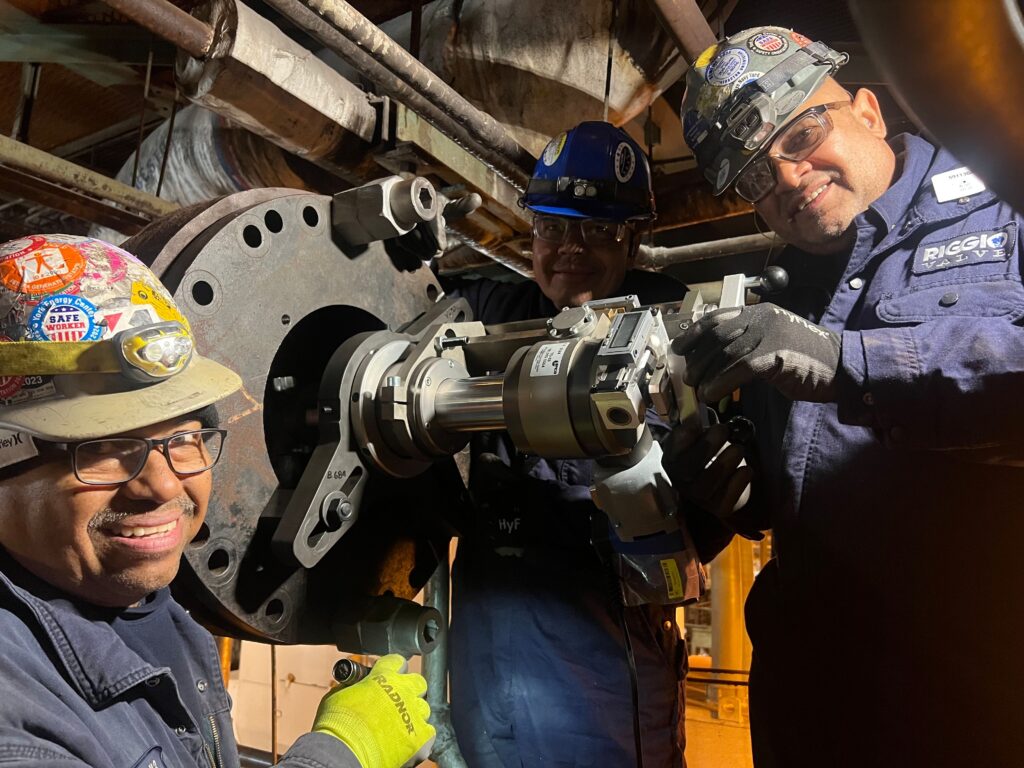
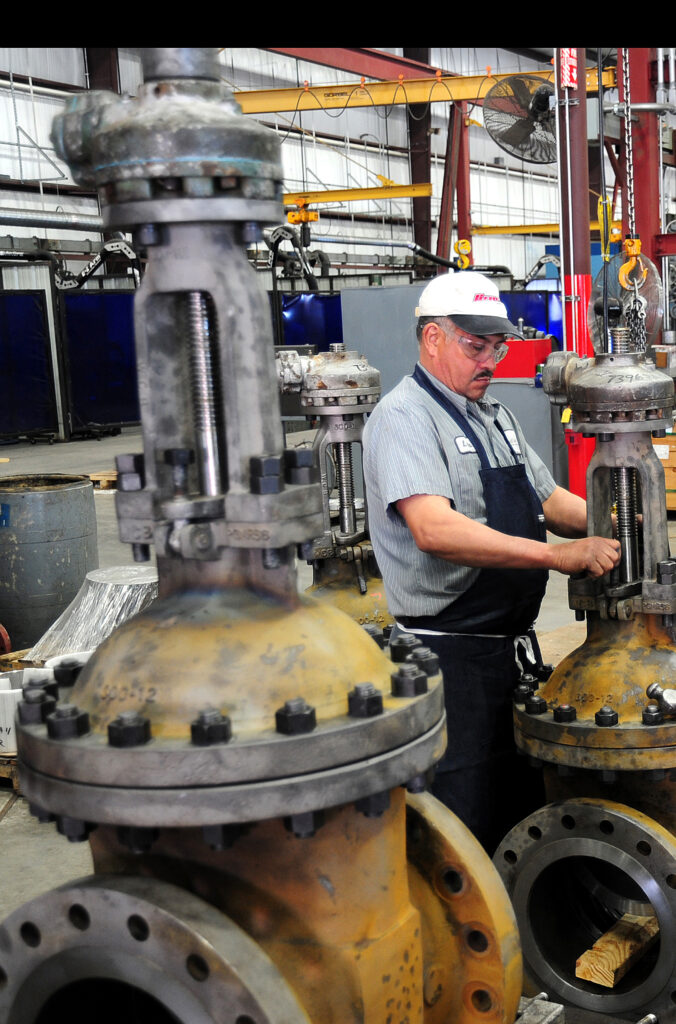
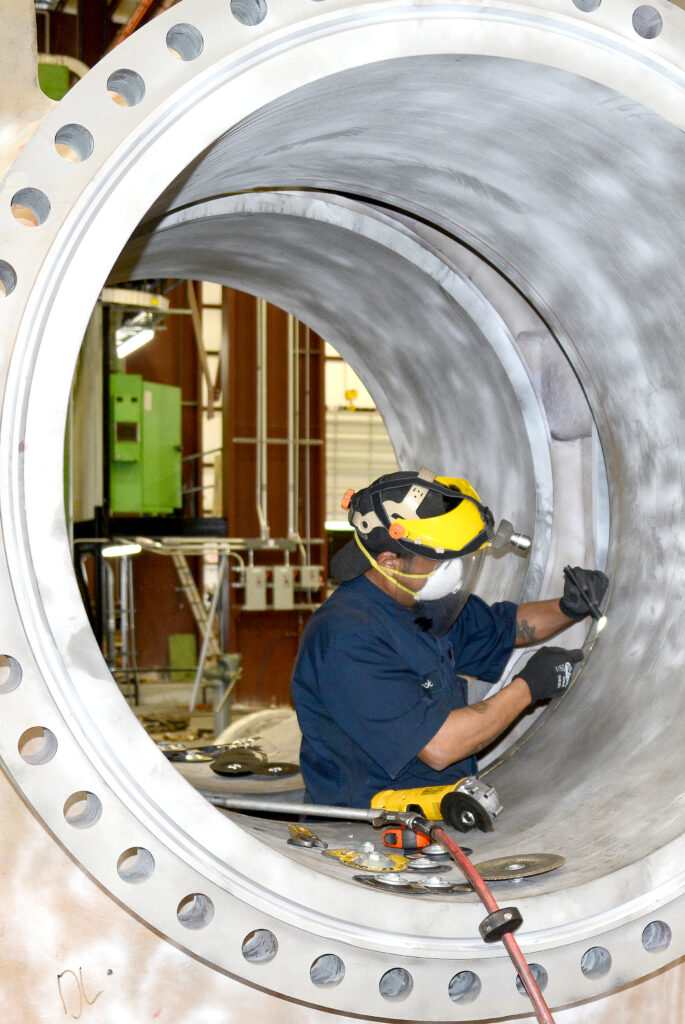
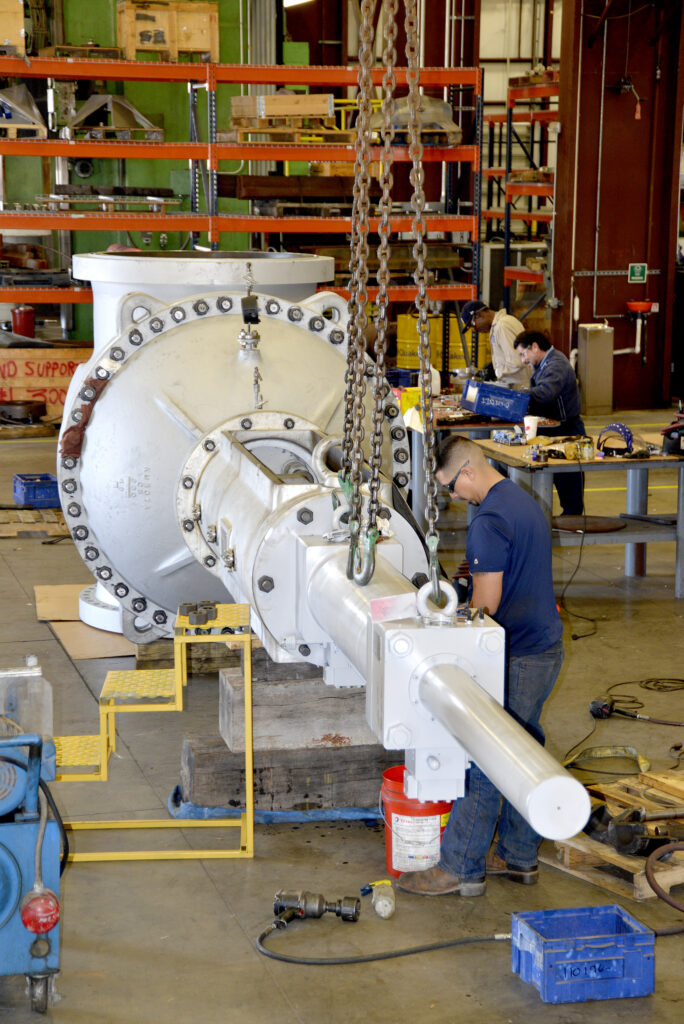
United Valve employees working in the shop on large valve bodies. All images in this series copyright Greg Johnson, United Valve.
Planning begins long in advance
Plant shutdowns, often called turnarounds, are among the most expensive — but necessary — events in the life of a refinery, power plant, chemical facility or other industrial processing operation. Because shutting down a plant is an expensive endeavor and may last for days or even weeks, operators plan carefully for these shutdowns deferring routine maintenance when possible. Due to the short window
of a shutdown, careful planning is essential to keeping the project on schedule and within budget to ensure the plant can continue to run safely and efficiently for years to come.
During a turnaround, thousands of work orders are completed while maintenance teams make rapid decisions about repairing or replacing the valves, actuators and flow control equipment that keep the plant operating. Those decisions carry significant financial consequences. A successful repair or replacement can help a plant operate reliably for another three to five years. However, a poor decision can lead to an unplanned failure during production that costs many times
more than just the planned repair or replacement cost of the equipment during the scheduled outage.
The planning process and all the steps that are precursors to a shutdown, include careful timing to avoid peak production seasons for chemical and petrochemical plants, heavy loads or demand seasons for power plants and other items that can impact timing. The article includes examples from both repair companies and OEM manufacturers to provide different perspectives.
Turnaround planning begins long before the shutdown
Although the outage itself may last only a few days or weeks, planning often begins 12 to 18 months in advance. The first step is defining the scope of work by identifying equipment that can only be safely accessed while the plant is offline. Maintenance that can be performed during normal operations is typically scheduled separately, allowing turnaround resources to focus on critical assets.
Once the scope is established, inspections begin and planners coordinate the contractors, repair companies, replacement parts and specialized labor
required to complete the work. Large turnarounds may involve hundreds, or even thousands, of outside workers, making scheduling a major undertaking.
While we are focused on the repair and replacement of valves, actuators and flow control products, plants use shutdowns to bring in vendors to service all
aspects of their plants simultaneously whenever possible for efficiencies and to be as minimally disruptive to normal operations as possible.
Experienced planners build additional time into the schedule for unexpected discoveries, shipping delays and other unforeseen challenges. Replacement parts with long lead times are ordered well in advance, and preferred repair contractors are secured early. This also impacts the workforce at repair companies. They need to plan to have enough staff not only onsite but also back at their facilities to make the necessary repairs and do the work required. One shop said they plan for up to 25% additional workforce during major shutdown periods, but this may be a conservative estimate and require more for larger plants or projects. This labor is often temporary workers but there are entire crews who travel around the country working for repair companies during outage seasons year after year.
Permitting is another critical planning element. Confined-space entry, hot work, elevated work, hazardous materials handling and other activities often require approval before the outage begins. Completing these administrative requirements ahead of time helps avoid costly delays once the plant is offline. Only after months of preparation does the plant begin the shutdown itself.
Managing complexity: How plants prepare for turnarounds
During the 2026 Valve Repair Seminar, Rotork’s Chad Laird reviewed the critical steps required to safely prepare a facility for a turnaround. Some of these
tasks, such as the actual shutting down of the processes, are completed by the facility staff. Laird recommends conducting a complete site walkdown with
plant operators before the shutdown. Walkdowns help identify undocumented system changes, verify operating conditions and allow repair teams to assess equipment locations, mounting positions, access restrictions, confined spaces and scaffold requirements before work begins.
While walking the plant, Laird suggests carrying simple but valuable inspection tools, including pitch gauges, calipers, a tape measure, flashlight, inspection mirror, camera (where permitted), clipboard and notebook. Collecting measurements, photographs and observations in advance helps repair teams arrive better prepared and minimizes surprises during the outage.
Before maintenance begins, all operating equipment — and every source of stored energy — must be isolated. Energy sources include electrical, mechanical, hydraulic, pneumatic, thermal, chemical and gravitational energy, along with less obvious hazards such as capacitors, springs, rotating equipment, elevated loads and trapped fluid pressure.
Once equipment is de-energized, power sources should be locked out and tagged to prevent accidental startup. Laird emphasized one frequently overlooked step: after lockout/tagout is complete, personnel should attempt to start the equipment to verify it has been properly isolated before work begins. Safety should always be the highest priority not only during shutdowns but all job activities.
But tag-in/tag-out (power isolation) is not just a guy who walks up and puts a lock on a panel, said Cass Jefcoat, Director of Flow Controls Fisher Equipment at John. H. Carter Company. “In many cases, the technician(s) have to pull in additional site personnel to participate in this process and approve it, generally operations or health/safety/environment (HSE) personnel. Coordinating and gaining their availability can be time consuming, but when this can be done with a “known schedule,” it reduces this stand-by time,” Jefcoat continued. “For repair jobs the duration of the job is, in the best case, an estimate due to discovery work.
However, when you are performing a repair by replace, this duration is much firmer. This allows you to coordinate with those additional personnel when the tags can be removed.”
Who makes the repair-or-replace decision?
Walking through a plant during a turnaround, the decision-making structure often looks very different from the facility’s organizational chart. Priority setting and authority to make decisions is driven less by job titles than by technical expertise, critical assets and the need to keep the outage on schedule.
RELIABILITY ENGINEERS are often the most influential voices when evaluating individual valves and flow control equipment. They maintain equipment histories, track failure modes, analyze repair records and monitor time between failures. By the time a shutdown begins, they have typically already identified many components as candidates for repair or replacement. In many cases, a site reliability engineer’s recommendation to replace a valve with a history of recurring failures carries significant weight — even when the replacement represents a substantial capital expense. Their objective is to maximize reliability
over the entire operating cycle, not simply minimize the immediate cost of the outage.
TURNAROUND MANAGERS: While reliability engineers provide the technical recommendations, turnaround managers oversee the outage itself. Usually appointed specifically for the shutdown, they are responsible for managing scope, schedule and budget. When unexpected conditions are uncovered, such as corrosion, erosion or damaged internals not identified during inspections, the turnaround manager determines whether to expand the scope of work, authorize
additional spending or pursue a temporary repair to keep the project on schedule. Because every additional day offline can cost millions of dollars in lost production, these decisions must often be made quickly.
PLANT LEADERSHIP: Final authority for decisions that could affect the plant’s next operating cycle typically rests with the operations superintendent or plant manager. For example, a reliability engineer may recommend replacing a critical control valve, but if the replacement has a six-week lead time and startup is
scheduled in days, plant leadership must decide whether to install a repaired valve with a documented level of risk, delay startup or expedite a replacement
at significant additional cost. At that point, the decision extends beyond engineering — it becomes a business decision balancing safety, reliability, production and financial performance.
INSPECTORS AND OEM EXPERTISE: Third-party inspection companies provide much of the data used to support repair-or-replace decisions. Seat leakage testing, actuator diagnostics and internal inspections document wear, corrosion and erosion, creating the evidence needed to justify repairs or replacements to maintenance, procurement and finance teams. When inspection results are inconclusive, original equipment manufacturers (OEMs) are often brought
into the process. Many valve manufacturers have field engineers dedicated to supporting plant turnarounds or have authorized companies who can
repair their products or rebuild them to the original specifications. Many of these companies are authorized repair facilities that are trained and certified
by OEMs to validate the integrity of their work and their businesses. They are committed to using OEM components or parts manufactured to OEM
specifications, as well as OEM procedures and best practices in their repair and retrofit operations both on job sites and in their shops. Their subject matter
experts can determine whether components can be repaired, retrofitted or upgraded, or whether deterioration of the valve body or pressure boundary makes replacement the only safe option. Always working within the guidelines and using OEM components during repairs is essential to the ongoing safety and reliability of the plant.
Managing time during the outage
Effective project management is a key driver of successful Shutdown, Turnaround and Outage (STO) execution, said Chris Jones, VP, Midwest Valve Services and Chairman of the Valve Repair Council. For valve and actuation repair scope, a dedicated valve service project manager provides the leadership, accountability and real-time visibility required to control risk, accelerate decisions, manage discovery work and maintain alignment across stakeholders. This single-point-of-contact model strengthens coordination, improves cost and schedule discipline, and ensures each project concludes with a structured close-out and action
able recommendations to support long-term site performance.
Once the plant is offline, time becomes the most valuable resource. Daily coordination meetings keep work aligned with the critical path, ensuring contractors, repair facilities, parts suppliers and inspection teams remain synchronized. Unexpected findings, shipping delays and scope changes are inevitable, making strong project management essential, Jones said. Whether decisions are made directly by the turnaround manager or escalated through a clearly defined approval process, timely decision-making is critical to minimizing downtime and avoiding schedule overruns.
Most sites require anyone performing work to complete a lot of paperwork every time they are onsite to execute a work order, said John H. Carter Company’s Jefcoat. And even if it is the same job that stretches over two days they may be required to complete separate paperwork for each day. One important form for most sites is a Job Safety Analysis (sometimes called Assessment), or JSA. This includes some standard documentation (work order numbers, names of employees performing the work, date and time, etc. Additionally, it includes in-depth information, such as:
▪ Tag Out Process (power isolation details)
▪ Overall work process to execute the job required to complete the work order
▪ Tools/equipment required to execute the work
▪ Comprehensive safety review of all possible risks associated with the execution of the work
▪ Solutions to mitigate the above identified safety risks
Having a single point of contact responsible for managing documentation and coordinating follow-up actions is critical to maintaining the project timeless and ensuring completion in the planned period.
Replace, repair or retrofit?
Some valves are scheduled for replacement because they have reached the end of their service life. Keith Floyd of Continental Field Systems suggests that
during an outage, routine inspections may identify an emergent problem that is severe enough to cause degradation of valve performance, safety concerns
or the potential for downstream equipment damage. At that point a decision must be made to replace, repair or retrofit the valve. Identifying the correct replace
ment valve can present its own challenges. Original documentation may be incomplete; equipment tags may be illegible and plant drawings may no longer reflect field conditions. Once identified, lead times can range from a few days to over a year depending on valve complexity, materials and manufacturing location.
Replacement costs also extend well beyond the price of the valve itself. In many facilities, valves are welded into the process piping requiring cutting, removal, installation, welding and inspection. In emergent situations, valve replacement may not be feasible because of the outage schedule. Oftentimes they can be successfully repaired or retrofitted. Changes in operating conditions, increased production demands, evolving safety regulations or obsolete equipment may make a repair or retrofit more practical than replacing an entire valve. In other cases, converting manual valves to automated systems or integrating newer diagnostic technologies can improve performance while extending equipment life.
According to Bill Morris and Katherine Si of Baker Hughes, retrofit engineering should be considered when possible. Upgrading trim, actuators or internal components can improve reliability, increase capacity, accommodate changing process conditions, bring equipment into compliance with current standards or address obsolete components without the cost and lead time of a complete replacement. (See sidebar for more specifics and examples of when retrofits were completed for some Baker Hughes clients.) Floyd also notes that whenever repairs can be completed inline, plants may save both time and money while reducing the overall duration of the outage and shared the example of repairing a seat replacement inline versus valve change out can save customers an average of 20% on one valve and over 30% on two valves. One rule of thumb says if the repair will cost 50% of the replacement or more, replace the valve. But make sure you are taking all extenuating factors into account before making this decision.
How long do shutdowns last?
The duration of a planned shutdown varies widely depending on the type of facility, its complexity and the scope of work. A midsize petroleum refinery
typically schedules a major turnaround every three to five years, with outages lasting three to six weeks. Larger refineries with complex coking or
hydrocracking units may require eight to 12 weeks. Chemical plants follow similar maintenance cycles. Large ethylene crackers commonly shut down for four
to six weeks every four years, while specialty chemical facilities often schedule shorter annual outages lasting two to three weeks. Power generation facilities vary by fuel source. Combined-cycle natural gas plants may schedule annual inspection outages of seven to 10 days, with major overhauls every three years last
ing three to five weeks. Nuclear plants operate on the longest maintenance cycles — typically 18 to 24 months between refueling outages — but those outages frequently extend 60 days or more while hundreds of maintenance activities are completed simultaneously. And power plants must bear in mind load requirements for their local customers when determining when to schedule their shutdowns.
The true cost of a turnaround
Few industrial projects rival the cost of a major plant turnaround. A refinery turnaround can easily exceed $100 million, with the largest facilities exceeding $200 million when direct and indirect costs including labor, materials, equipment rentals, engineering services and lost production are factored in according to industry resources including Maintenance Resources and the Association of Turnaround Industry Professionals. Labor represents the largest share
of those costs. According to contractor management firm Veriforce, large turnarounds may require 2,000 to 4,000 contract workers operating around the
clock in rotating shifts. Labor alone often accounts for 40% to 60% of total turnaround costs.
Valve repair companies frequently establish temporary mobile service centers onsite, allowing technicians to perform machining, lapping, grinding and other repairs without transporting equipment to an offsite shop. More extensive repairs, however, may still require specialized shop services, adding both time and logistics to the project. Repair shops may also have to increase staff at their facilities for products that will be repaired or refurbished in their shops and not onsite. Materials typically account for another 25% to 35% of turnaround costs. A large control valve used in severe service can cost anywhere from $15,000 to $80,000, according to Asset Performance Networks and online searches of various valve suppliers, depending on the valve’s size, materials and trim configuration. Adding intelligent positioners or digital controls further increases the investment, and those costs multiply quickly across hundreds of work orders. Yet the largest expense often isn’t maintenance — it’s lost production. For a refinery processing 300,000 barrels per day with an $8-per-barrel
margin, every day offline represents approximately $2.4 million in lost margin. If an outage extends three days because of an unexpected valve failure or a long-lead replacement part, the financial impact can exceed $7 million before considering any additional repair costs. Independent power producers face
similar challenges. A 500-megawatt natural gas facility selling electricity at $40 per megawatt-hour can forfeit nearly $500,000 in daily revenue while offline. Many public companies report these numbers in their annual reporting to shareholders as it is such a significant expense and reason for production shutdowns of plants.
Looking beyond the next startup
While minimizing downtime is always a priority, the most successful turnarounds focus on more than getting the plant back online as quickly as possible.
Turnarounds are also an opportunity to improve reliability, modernize aging assets and reduce the risk of costly unplanned outages before the next
maintenance cycle. That requires balancing technical expertise with business priorities. Reliability engineers, plant managers, inspectors, OEMs and repair specialists each bring a different perspective to the repair-or-replace decision, but the objective is the same: maximize long-term performance while controlling
cost, schedule and risk. In many cases, repair or retrofit can safely extend the life of existing equipment and provide substantial savings. In others, replacement is the only practical solution to improve reliability, meet changing operating conditions, address product obsolescence or comply with current safety and regulatory requirements. Ultimately, every valve, actuator or control device evaluated during a turnaround represents a decision that extends far beyond the outage itself. Choosing the right course of action can improve plant performance for years, while the wrong decision may result in lost production, unexpected maintenance and significantly higher costs before the next scheduled shutdown.
Retrofit engineering as an alternative to replacement
What is retrofit engineering? Bill Morris and Katherine Si of Baker Hughes recently defined it at the Valve Repair Seminar in Pasadena, Texas, as: taking something already in service and upgrading it to meet new requirements or improve performance.
When to consider:
Benefits of retrofit engineering may include improved runtime to failure, reduced total cost of ownership and enhanced quality and safety.
Why are more repairs not retrofits?
Retrofits require solution-based selling that depends on deep technical expertise. Here are some examples shared by Morris and Si of successful retrofit projects completed by the Baker Hughes team for control valve customer applications.
Example 1: For an offshore application, the customer was looking to increase capacity that would require a Cv change in a critical 18-in. cage-guided control valve with anti-cavitation trim, and a replacement valve would take 28 weeks to produce. The retrofit team was able to design a special cage in two days and produce parts in eight weeks that required no other component changes.
Example 2: An offshore Masoneilan™ LincolnLog™ configuration with three-stage trim was developing packing leaks every 18 to 24 months which caused the unit to trip. The team learned the customer had a flushing process that sent foulants and debris into the valve that could become lodged in the seal ring and cause damage to the seal and stem.
The team developed a solution that changed the seal from PTFE to a metal seat. However, it would reduce the leakage rate from a Class IV to Class III, which the customer could accept. It also required a change in actuator sizing to accommodate the additional friction from a balanced metal seal.
Example 3: A customer with a pilot valve in a power application required a trim upgrade due to changes in process media from steam to water. This change caused a sensing configuration change from internal to external that increased centerline face-to-face dimensions. The retrofit solution included increasing valve sizing to the new media and a new trim solution that would work with existing components. A compatibility check was completed and the valve was upgraded to meet the new process conditions.
Example 4: A customer found that an existing actuator was obsolete and required replacement, but they were limited by space constraints in the application. The retrofit team found an equivalent actuator replacement with minimal changeout components, reviewed and confirmed parts compatibility, and ran required calculations to verify all changes, delivering a solution that hadn’t been previously considered.
Example 5: A customer requested a spring replacement, but the required set pressure had increased from 20 bar-g to 36.98 barg. The set pressure revision was required to meet applicable codes and standards while also retaining compatibility with the existing safety valve. The retrofit team found a new spring and washers that could be replaced if needed for maintenance that met all code compliance and component compatibility for the customer’s application.



How to overcome maintenance challenges and improve precision control in flotation applications for better performance and increased profitability.
May 6, 2025
Additive manufacturing is often assumed to be more sustainable than subtractive production but there has been relatively little evidence to support that claim — until now.
February 12, 2025
Chrome carbide is one coating that can be done during manufacturing or repairs that extends service life of valves and other flow control components.
January 28, 2025