
Produced by


Produced by
Published November 19, 2026
A fatal accident at a job site in LaPorte, Texas exposed the need for more training and awareness of plug valve safety.
By Greg Johnson, United Valve
Valve designs have evolved over the years to accommodate the changing temperatures and pressures associated with the production of more hazardous substances. Yet an incident six years ago at a chemical facility, involving a plug valve in a pressurized application underscores the importance of awareness, training and adherence to standards as well as valve design, and collaboration across the value chain to promote safety at every stage of the industrial valve life cycle.
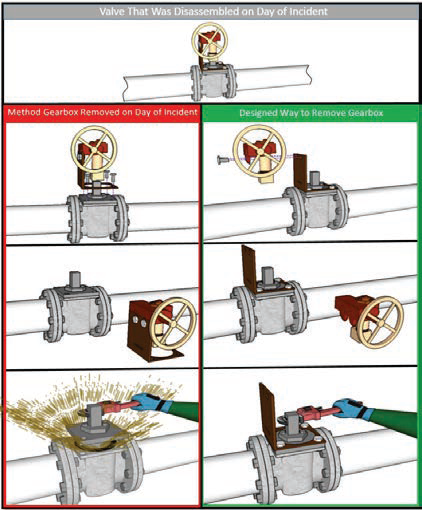
The request was straighforward, and the job should have been completed in about a half hour — remove the actuator from an installed valve so that it could be locked out in accordance with the plant’s safety requirements, prior to installing a new section of piping downstream of the valve. Unfortunately, through a combination of insufficient training and a lack of design knowledge, the contractor inadvertently partially disassembled the valve resulting in a massive release of hot acetic acid at 238 psi. This caused the death of two contractors performing the work, along with multiple injuries of roughly 30 people that required medical evaluation or treatment and approximately $40M in property damage.
The valve met all the design requirements at the time of manufacture, but guidance for its safe design and use had not yet been added to the plug valve standard (API 599, “Metallic Plug Valves”), or other pertinent reference documents. API 599 was subsequently updated in 2025 and further addressed the issue with stronger wording, drawings and cautionary notes. But because the standard only affects new valves, not those already in-line in plants around the world, it is important to raise awareness so that incidents like this are not repeated.
The details of this incident are chronicled in the CSB (U.S. Chemical Safety and Hazard Investigation Board) investigation report detailing the July 27, 2021, chemical release at the LyondellBasell LaPorte Complex. The report is available at their website: csb.gov.
The plug valve — a legacy design
The plug valve is the oldest of valve designs, conceived over 2,000 years ago in Italy. The design would be nearly forgotten until the early 20th century when modern updates and improvements were developed and patents applied for. This early 20th century design is still the backbone of current plug valve construction, consisting of a tapered body with matching tapered plug, held inside the body cavity by a bolted cap with at least four bolts. Until plug valves became mostly actuated in the 1950s and 1960s, this design was acceptable and caused no major reported incidents.
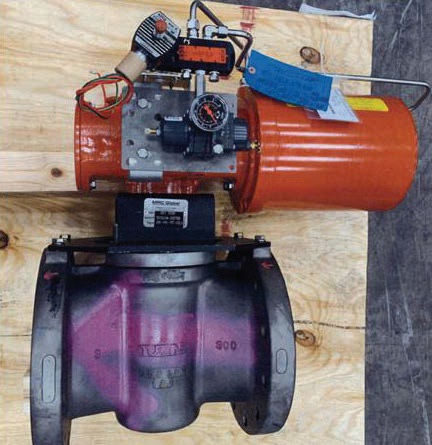
As plant operating conditions became more critical and remote operation of valves became a safety and operational requirement, the addition of powered actuators on plug valves became more prevalent. Adding an actuator and bracket was originally achieved by utilizing the same bolts that held the cap to the body. This design was soon seen as a potential safety issue, so manufacturers virtually eliminated the issue by machining flats with drilled and tapped holes in the topside of the end flanges. Eventually the API 599 valve standard would be amended to require such attachment designs.
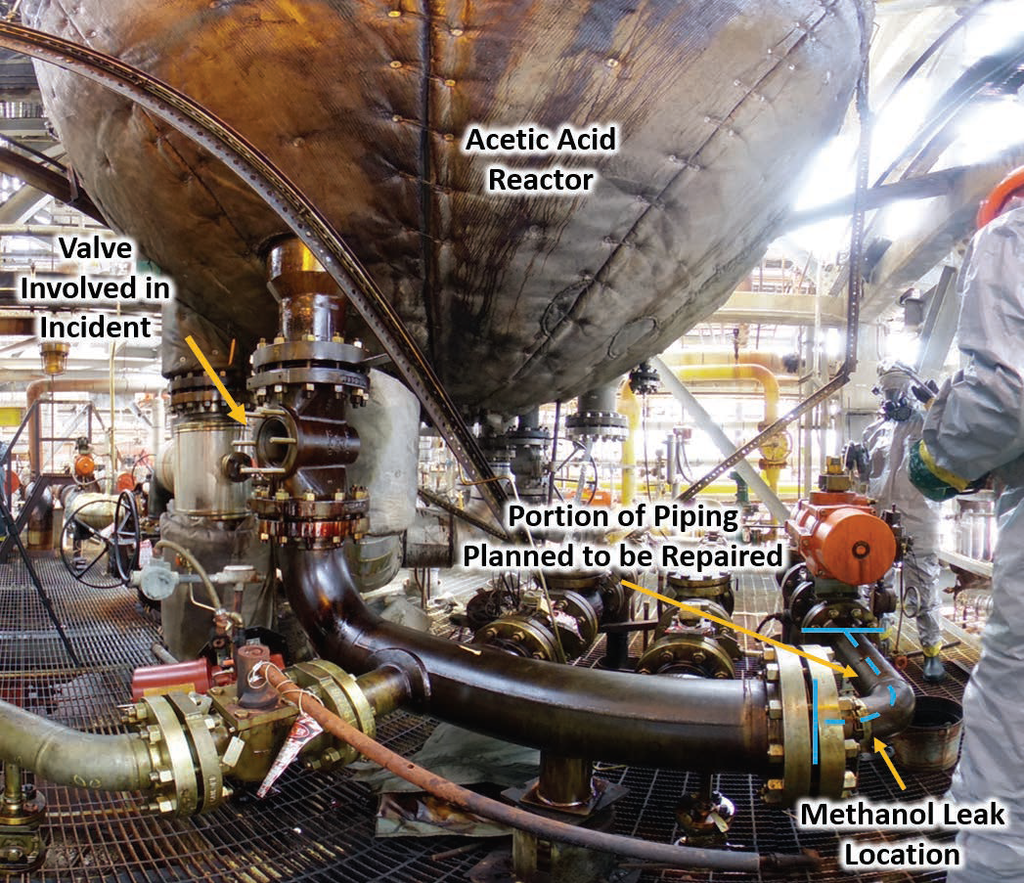
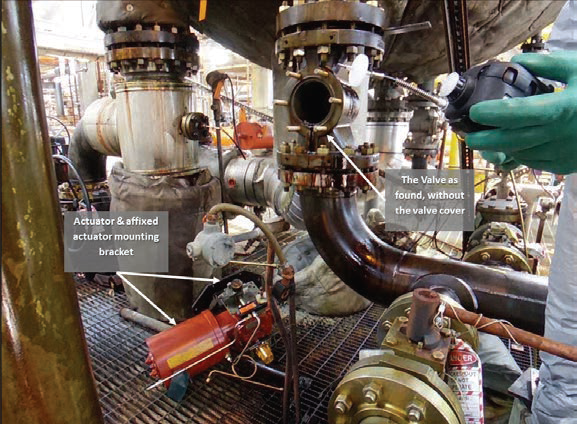
The valve in this incident was designed this way with the actuator attached to the valve utilizing these tapped flange mounting holes. The problem occurred because the personnel tasked with removing the actuator did not know which bolts held the actuator in place and which bolts held the cap and internal pressure inside the valve. Tragically, the contractor just removed all the bolts, causing the accident.
Buttweld-end valves present unique installation challenges and removal risks
Although nearly all new plug valves are designed with actuator mounting holes that are not part of the pressure-
containing bolting system, there is one style of plug valve that cannot easily follow the API 599 standard’s guidance. That type is the buttweld-end plug valve. Since buttweld-end valves have no end flanges in which to put actuator mounting holes, installation can present unique challenges.
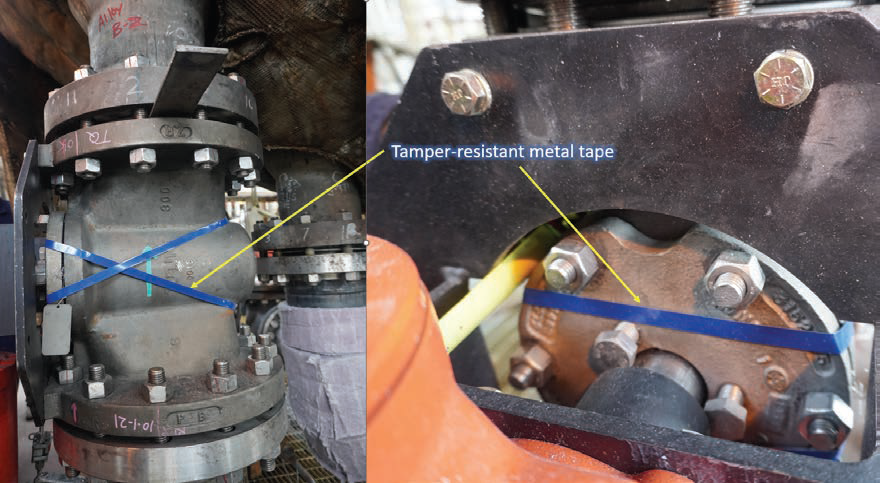
Because buttweld-end valves have no mounting holes, when installing these valves, some facilities utilize four of the existing body-bonnet bolt holes along with longer studs with double nuts to mount the actuator bracket. Given the inherent risk of utilizing the same bolts for valve installation and the actuator bracket, this approach to installation must be approved by the owner/end-user. Additionally, consistent with the updated API 599 standard, very prominent metal tagging should be attached to the valve, warning personnel not to remove the bracket under pressure.
Because of these safety risks, owners/end-users of buttweld-end plug valve installed in this manner should consider the use of wire-locked bolting or castellated nuts with locking pins installed. Although the locking pins and wire locks could be cut off, allowing removal of the pressure-containing bolting, these additional pins and locks would an additional physical barrier to improper removal while conveying an enhanced visual message to the personnel performing the job, to find out more information before proceeding. Changing the bolting to allow these types of specialty fasteners would also need to be guided by updates to the API 599 standard.
Owner responsibility and actions
The previously mentioned bolting changes could help to reduce the risks of accidental pressure release in these valves. However, an additional step to consider would be for the owners to perform an audit of all installed plug valves to identify potential problem valves before they are serviced.
The audit process should involve an inspection by knowledgeable personnel familiar with the guidance and the process lines where the valves and actuators are installed. This task could be accomplished by valve technicians that are familiar with these valve designs, or if properly trained and available, owner/end-user staff are available. Any valve with the potential for accidental release to atmosphere while under pressure could then be identified and conspicuously marked using paint, attached tagging or something similar that works within the company’s current operations.
Proper training and education is the key
Regardless of the approach taken, the importance of continued training of field personnel cannot be overlooked. Continued and routine training should be an integral component to help mitigate the potential for similar incidents. The changes in API 599 also help to prevent the improper removal of newly manufactured valves and will hopefully shed additional light on the issue of in-service, installed valves.
As with all other specialty crafts and trades performing on-site work in refineries and industrial plants, the need for experienced and qualified technicians is paramount. It is not enough to just ask a contractor if they can perform a specific ad-hoc task just because they are present and available. This incident underscores the need for personnel to be specifically trained and experienced. In this case it was a valve issue, but it could have been a pump or other pressurized device.
Just because a valve technician is experienced and qualified at one specific type of valve does not necessarily mean that they have the proper experience and skill set to work on all types of valves.
Therefore, as companies consider what type of curriculum or training programs to develop, they should ensure that their training curriculum addresses the specific types of valves and mounting scenarios utilized at their facilities. They should also consider utilizing the approach in the nondestructive testing field takes in training and certifying their technicians. The American Petroleum Institute RP621, “Reconditioning of Metallic Gate, Globe and Check Valves” standard could form the backbone of such a course.
Further, facilities could include pressure boundary fastener and plug valve safety specific section in their site safety training presentations and provide contacts for subcontractors to use for questions or for additional information.
The VMA and VRC
The creation of effective and strong training calls for cooperation between end users, valve repair companies, valve manufacturers and other interested parties. The Valve Repair Council (VRC), part of VMA, is in the early stages of considering such a program and is uniquely positioned to help lead in the development of training and awareness of this issue so that it is not repeated.
More broadly, VMA is providing information to its VRC membership raising the issue so that companies affected can work to develop mitigation procedures the best fit for each situation. Additionally, VMA’s Education Committee is adding content to its quarter-turn Valve Basics training courses detailing what to look for and how to perform any work on these types of valves. Further training and awareness programs focused on valve safety, installation and repair issues are also being discussed. While the previously referenced changes to the API standards are important, they address only the design of the valve. VMA and VRC can help to continue to raise awareness of safety issues like those discussed in this article, but also on other specific valve-related safety concerns during the commissioning and repair of valves in the field.
The steps taken by industry since the LaPorte accident will help by focusing attention on this issue. However, importance of training as part of the solution cannot be overlooked.
ABOUT THE AUTHOR
Greg Johnson is the former president of United Valve and is a member of numerous VMA committees and a Valve Repair Council board member. He is a founding member of the VMA Education and Training Committee and is past president of the Manufacturers Standardization Society.
*All images in this article are copyright of and were provided by the US Chemical Safety and Hazard Investigation Board (CSB).



June 26, 2026
The certification includes Amendment 1:2024 for its quality management system.
April 21, 2026
Why engineered mounting kits are critical to valve automation integrity.
April 7, 2026
